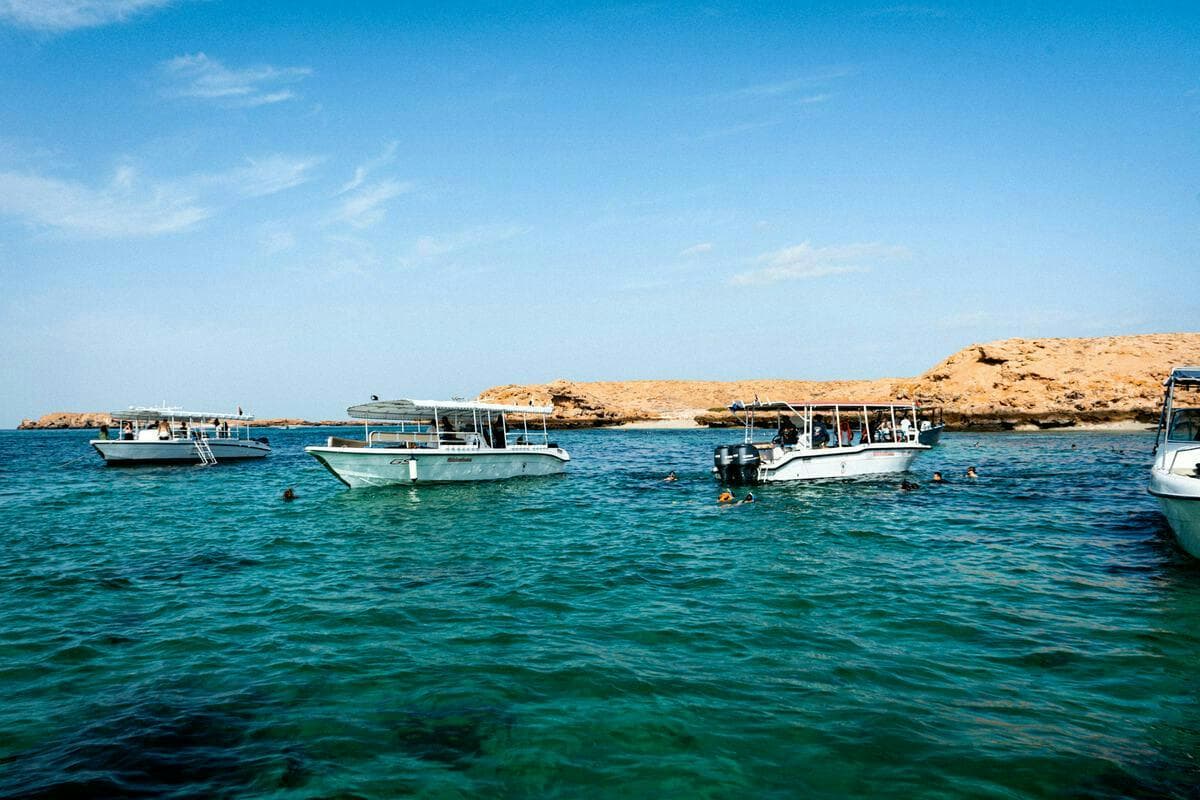
Dayminiyat Island
The Turquoise Sanctuary: Oman’s Pristine Island Escape
A Journey Into the Wild Blue
It begins with the gentle hum of boat engines as you leave Muscat’s bustling port behind, the city’s skyline shrinking into the distance. For about 45 to 50 minutes, you skim across the Gulf of Oman, watching the water change from an ordinary blue to an almost surreal palette. The anticipation builds—and then, suddenly, the world below the boat glows with a neon-vibrant turquoise, signaling that you’ve arrived at a place unlike any other: the protected islands just off Oman’s northern coast.
These islands are more than a destination; they’re a sanctuary. Strict protection has ensured that the environment remains untouched, preserved in a state of wild, natural beauty. Here, there are no hotels, no restaurants, no shops, and not a single permanent resident. Instead, your senses are greeted by the purity of white sand beaches, dramatic limestone cliffs, and a living kaleidoscope beneath the waves. It’s a rare place where nature still calls the shots, and every visit feels like a privilege.
Immersion in Nature: Things To Do
Snorkel with Turtles: The Main Event
As soon as you slip into the warm, crystal-clear water, you’re in another world. The islands are internationally renowned as a nesting and feeding ground for both Green and critically endangered Hawksbill turtles. Snorkeling here is not just a casual swim—it’s an encounter with one of nature’s most ancient and graceful creatures. It’s common, even for first-time visitors, to see a dozen or more turtles gently gliding over lush meadows of seagrass, occasionally surfacing for a breath before returning to their underwater ballet. These moments often leave visitors awestruck, quietly floating as the turtles go about their timeless routines just inches away.
Scuba Diving: For the Adventurous at Heart
If you’re certified—or even if you’re a curious beginner looking for a supervised “discovery” dive—these islands offer some of Oman’s most spectacular underwater landscapes. The reefs brim with healthy hard and soft corals in an array of shapes and colors, supporting a vibrant ecosystem. Watch for moray eels peeking from rocky crevices and large schools of tropical fish swirling in choreographed patterns. Divers often spot rays, octopuses, and, if lucky, the occasional leopard shark. The sense of serenity and discovery is intensified by the knowledge that these reefs are among the healthiest in the region, thanks to strict environmental protection.
Whale Shark Spotting: Majestic Gentle Giants
For those visiting between September and October, the experience can be even more magical. This is when whale sharks—the largest fish in the sea—migrate through these plankton-rich waters. Despite their size, whale sharks are gentle, feeding only on tiny organisms. Swimming alongside these giants, with their spotted backs glimmering in the sunlight, is an unforgettable thrill. Many tour operators know the best spots and times, and while sightings aren’t guaranteed, the odds are high enough to inspire hopeful excitement.
Island Hiking (Seasonal): Land, Explore, and Soak in the Views
During the cooler winter months, the islands open up for exploration on land. Small groups can land and hike the rugged ridges, tracing paths across the rocky terrain. The “summit” of the larger islands rewards the adventurous with a breathtaking 360-degree panorama: limestone cliffs, hidden bays, and the entire archipelago scattered like jewels across the endless blue. It’s the kind of view that fills memory cards and hearts alike.
Places to Discover: Hidden Gems of the Archipelago
Turtle City: Nature’s Gathering Place
On the southern side of the main islands lies “Turtle City,” a name that perfectly captures its essence. Here, turtles congregate in impressive numbers to feed, creating a living spectacle for snorkelers and divers. The seagrass beds are thick and healthy, supporting dozens of turtles at once—sometimes so many that you lose count. It’s a favorite stop for guides, and visitors are often encouraged to float quietly and observe rather than chase, ensuring the animals remain undisturbed.
Black Tip Reef: For Shark (and Parrotfish) Enthusiasts
If you’ve ever wanted to see sharks in the wild, but without the fear factor, Black Tip Reef is the place. This shallow, sunlit area is famous for its resident Black Tip Reef Sharks—small, sleek, and completely harmless to humans. Watching them glide effortlessly through the water is an awe-inspiring reminder that sharks are not the monsters they’re often portrayed to be. Brightly colored parrotfish add even more color to the scene, nibbling on coral and weaving through the reef.
The “Hidden” Beach: Your Private Piece of Paradise
On Jabal Al Kabeer, one of the larger islands, there’s a stretch of sand so dazzling it almost hurts your eyes. Known as the “Hidden Beach,” it’s accessible only during the winter season when landings are permitted. Step ashore and you’re greeted by powdery white sand, turquoise waters lapping at your feet, and utter tranquility. With no crowds—often, no one but your group—it feels like you’ve discovered your own private paradise. Whether you’re picnicking, sunbathing, or simply soaking in the view, it’s a highlight for many visitors.
The Police Island: The Guardians’ Outpost
Unlike the other pristine islands, Police Island is home to a small ranger station—the only structure in the entire reserve. The rangers here are guardians of the ecosystem, watching over the fragile habitats and enforcing protection rules. The waters around Police Island are said to be among the clearest and most vibrant, teeming with marine life. Snorkelers often report seeing everything from clownfish to rays within a single swim.
Planning Your 2026 Trip: Itinerary and Seasonal Advice
Seasonal Restrictions: Protecting Nature Comes First
The islands’ strict protections mean that access and activities vary by season. From November to April, visitors are allowed to land on the beaches, making this window perfect for those wanting to picnic on the sand, hike the island trails, and explore away from the water. This is peak season: the weather is pleasant, the sea is calm, and both marine and bird life are abundant.
From May to October, however, landing is strictly prohibited. This is the crucial nesting period for turtles and a critical time for migratory birds. The islands transform into an undisturbed haven, but visitors are still welcome—just not on land. Boats can circle the islands, and snorkeling and diving are permitted in the surrounding waters. Many find that observing the islands from the boat during this time, knowing their visit supports conservation, is a rewarding experience in itself.
Pro Tips: Making The Most of Your Visit
Permits: Plan Ahead
Because these islands are a nature reserve, every visitor needs a permit. If you book through a licensed tour operator—most of which depart from Al Mouj Marina or Seeb Marina—the permit process is handled for you. For those charting a private course, the permit application must be made directly with the Environment Authority, and it’s wise to start the process well in advance.
Booking: Don’t Leave It to Chance
These trips are among the most popular nature excursions in Oman, and demand is intense—especially on weekends or during holidays. For 2026, it’s highly advisable to secure your spot at least 3–5 days in advance. Top operators often fill up quickly, and last-minute availability is rare, particularly for larger groups or families.
What to Bring: Come Prepared for Nature
There is no shade on the islands whatsoever, and the sun can be intense even in winter. Pack reef-safe sunscreen to protect both your skin and the fragile coral ecosystem. A long-sleeved rash guard or UV shirt is a smart choice for snorkeling, offering comfort and sun protection. Bring plenty of water to stay hydrated, as facilities are non-existent. Most reputable tour companies provide snacks or a BBQ lunch, but always confirm in advance.
Eco-Friendly Mindset: Leave No Trace
Perhaps most importantly, embrace a “leave no trace” mentality. Take everything you bring with you back to the mainland, including all trash. Treat wildlife with respect—observe, don’t touch or chase. Your responsible behavior helps ensure the islands remain pristine for future generations.
Suggested Half-Day Itinerary: Make the Most of Every Moment
8:00 AM: Rendezvous at the Marina
Arrive at Al Mouj Marina or Seeb Port, where your guide and crew greet you. There’s a buzz of excitement as travelers gather, double-checking gear and snapping pre-trip photos.
8:30 AM: The Scenic Cruise Begins
With everyone aboard, the boat slips away from the dock, heading out into open water. Keep your eyes open—dolphins are frequent companions, often leaping in the boat’s wake or racing alongside in playful pods.
9:30 AM: Snorkeling at Turtle City
The first stop is Turtle City. The water here is impossibly clear and calm. After a safety briefing, you slip in and are immediately surrounded by turtles, their ancient faces and gentle eyes both humbling and mesmerizing. Guides point out interesting behaviors and unique markings as you float quietly, becoming part of their underwater world.
11:00 AM: Explore a Coral Reef or Land for a Hike
Next, depending on the season, you’ll either snorkel over a thriving coral garden—spotting clownfish nesting in anemones and watching parrotfish crunch coral—or, if it’s winter, make landfall. A short hike up the rocky trails leads to a panoramic viewpoint. The silence is profound, the vistas endless.
12:30 PM: Lunch With a View
Back on board, the crew prepares a BBQ lunch. There’s something magical about eating freshly grilled seafood or kebabs as the sea breeze cools you, surrounded by nothing but water and sky.
1:30 PM: Return to Civilization
Full, happy, and sun-kissed, the boat heads back toward Muscat. The islands recede into the distance, but the memories linger—a mosaic of turquoise water, wild beaches, and close encounters with some of the ocean’s most incredible creatures.
2:15 PM: Back at the Marina
You’re back on shore, salty and satisfied, already dreaming of a return trip to Oman’s turquoise sanctuary.
Written by Farees
Travel writer and founder of Oman Explorer. Based in Muscat, Oman, with years of experience exploring the Sultanate's hidden gems, ancient forts, stunning wadis, and desert landscapes. Passionate about sharing authentic travel experiences and helping visitors discover the beauty of Oman.
Learn more about the authorMore Articles to Explore



Comments (0)
Sign in to comment
Create a free account or sign in to join the conversation.
No comments yet. Be the first to comment!