Exploring the Timeless Beauty of Oman
Oman: Where Time Stands Still and Stories Come Alive
In a world spinning ever faster—where technology often trumps tradition and glass towers reach for the clouds—there exists a place that gently resists the constant rush. Oman, fondly known as the “Pearl of Arabia,” is a land where the rhythm of life is set not by the ticking of clocks or the blare of horns, but by the shifting of sand dunes and the echo of prayer calls floating over rugged mountain passes. Here, time seems to stretch and breathe, making room for both the ancient and the now.
First Impressions: A City Bathed in Warmth
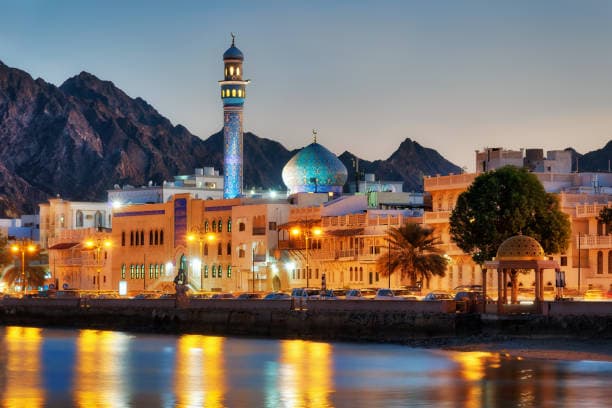
Your journey in Oman most likely begins in Muscat, the capital city, yet calling it a “city” almost feels misleading. Unlike many capitals in the Gulf region—where the skyline is often dominated by futuristic skyscrapers—Muscat is an embrace of humility and heritage. Its white-washed buildings and terracotta roofs are gently framed by the dramatic, brown Hajar Mountains. At sunrise, the city bathes in a golden light, with the sea on one side and a tapestry of date palms and frankincense trees on the other.
The Sultan Qaboos Grand Mosque is a sight to behold, not just for its sheer scale, but for its quiet elegance. The white marble glistens under the Omani sun, and intricate mosaics and carvings invite you to slow down, to notice the artistry and care poured into every detail. Step inside, and you’re enveloped by a sense of peace—there’s a hush here that somehow manages to quiet even the busiest mind.
Wander a little farther, and you’ll find yourself at Muttrah Souq, one of the oldest marketplaces in the Arab world. The souq is a living storybook, its narrow lanes scented with frankincense and lined with stalls glimmering with silver jewelry, vibrant textiles, and hand-carved trinkets. Locals barter amiably, voices mingling with the laughter of children and the melodic calls of vendors. Even if you leave empty-handed, your senses will be richer for the experience: the sweet smell of oud, the cool heft of an antique khanjar, the flash of a smile from a shopkeeper proud to share a piece of his heritage.
The Majesty of Mountains and the Magic of Wadis
Leaving Muscat behind, the road curves and climbs into the heart of Oman’s Hajar Mountains. The scenery here is nothing short of dramatic. Jagged peaks, sculpted by millennia of wind and water, rise sharply against the sky. As you ascend, the air grows cooler, and the land opens up to reveal small villages clinging to the hillsides, their mud-brick houses blending seamlessly with the earth.
At the crown of these mountains stands Jebel Shams—the “Mountain of the Sun”—Oman’s highest point. Standing at the edge of its great canyon, often called the “Grand Canyon of Arabia,” you can’t help but feel small, in the best possible way. The canyon’s walls drop away suddenly, revealing layers of rock painted in hues of ochre, rust, and violet by the setting sun. Sometimes, clouds drift lazily below the rim, adding an almost dreamlike quality to the view.
Hidden within these rugged landscapes are Oman’s famous wadis—river valleys that, after the rare rains, burst into life with cool, clear water. Wadi Shab is one such gem. To reach its emerald pools, you’ll trek along a winding path shaded by date palms, cross shallow streams, and squeeze through narrow canyons. The reward? A series of turquoise waterholes fed by gentle waterfalls, inviting you to shed your shoes and worries alike. Wadi Bani Khalid, another favorite, is slightly more accessible but no less magical, with its broad pools reflecting the sky and the distant laughter of families picnicking under the palms.
Into the Silence: The Enchantment of the Sands
No trip to Oman is complete without venturing into its legendary deserts. The Wahiba Sands, a sea of undulating dunes stretching for nearly 200 kilometers, is where the heart of Oman beats strongest. The drive to the desert is a journey in itself: busy roads give way to quiet tracks, and the world narrows to a ribbon of sand and sky.
As dusk falls, the dunes begin their nightly transformation, shifting from gold to rose, then to deep crimson. The air cools, and an immense silence settles over the landscape. It’s a silence so complete, you can almost hear your own heartbeat—a rare gift in today’s noisy world.
Spend a night in a Bedouin camp, and you’ll discover the true warmth of Omani hospitality. Your hosts, often descendants of nomadic tribes who have called these sands home for generations, will welcome you with dates and sweet, cardamom-spiced coffee. Around a crackling fire, stories are shared—about the stars, the desert, and the slow, patient wisdom that comes from living close to nature. When you finally crawl into your tent, the sky above is a dazzling canvas of constellations, the kind you only see in places untouched by city lights.
People and Traditions: The Soul of Oman
If Oman’s landscapes are its body, its people are undoubtedly the soul. Omanis are renowned for their warmth, humility, and quiet pride. The country’s long history as a crossroads of trade and culture has shaped a society that is deeply respectful of tradition, yet open-hearted and curious about the world.
This spirit is perhaps most evident in the ancient town of Nizwa, once the capital of Oman and still one of its cultural heartbeats. The Nizwa Fort, with its massive round tower, stands guard over a bustling marketplace. Every Friday, the town comes alive for the famous goat market, where buyers and sellers—many clad in traditional dishdashas and colorful turbans—haggle with good humor and a twinkle in their eyes. It’s a scene that could have played out centuries ago, were it not for the occasional smartphone peeking out from a pocket.
Stroll through the old quarter, and you’ll find more than just architecture; you’ll find layers of history, stories etched into the walls of mud-brick homes and whispered by the wind as it rustles through the palm groves. Oman’s traditions are living, breathing things: from the art of making halwa—a sticky, fragrant sweet—to the delicate embroidery on a woman’s dress, every detail is a thread in the vibrant tapestry of Omani life.
Coastal Wonders and Gentle Giants
While Oman’s deserts and mountains captivate the soul, its coastline offers a gentler, but no less awe-inspiring, beauty. Along the shores of Ras Al Jinz, the Indian Ocean meets golden sands in a place where time, once again, seems to slow. Each year, thousands of endangered green turtles return to these beaches to nest—a timeless ritual that has played out for millennia.
Watching a mother turtle, laboriously making her way up the beach under a moonlit sky, is a humbling experience. Rangers and conservationists work hand-in-hand with local communities to protect these gentle giants, and visitors are welcomed to witness this miracle of nature with the utmost respect and care.
Elsewhere along the coast, the fjord-like inlets of the Musandam Peninsula offer a completely different kind of seascape. Here, dramatic cliffs plunge into deep blue waters, and traditional dhow boats glide silently past pods of dolphins. The sea breeze carries the scent of salt and adventure, inviting you to explore hidden coves and remote fishing villages where life is measured by the tides.
A Culinary Journey: Savoring Omani Flavors
No journey is complete without savoring the local cuisine, and Omani food is a delicious reflection of its history and geography. Influenced by centuries of trade with Africa, India, and Persia, Omani dishes are fragrant, flavorful, and often communal—meant to be shared with laughter and stories.
Start your day with a simple breakfast of khubz (flatbread) dipped in honey or date syrup, washed down with strong, sweet tea. At lunch, try shuwa—tender lamb marinated in a blend of spices, then slow-cooked in an underground oven until it falls apart at the touch of a fork. Or sample majboos, a fragrant rice dish studded with saffron, nuts, and raisins.
Wherever you go, you’ll be offered kahwa (Omani coffee), served in tiny cups and always accompanied by plump, sticky dates. It’s a gesture of welcome, a way to slow down and savor the moment—a small, delicious reminder that in Oman, hospitality is both an art and a way of life.
The Rhythm of Everyday Life
What sets Oman apart is not just its landscapes or its monuments, but the rhythm of everyday life. In the villages and towns scattered across the country, you’ll find scenes that are both timeless and utterly unique. Children play soccer in dusty streets, their laughter echoing off ancient walls. Fishermen mend their nets on sunlit beaches, pausing to wave as you pass by. Elderly men gather in the shade of date palms, sharing stories and sipping coffee, their faces etched with the wisdom of years.
Here, the past is never far away. It lives in the aromatic smoke curling from a clay incense burner, in the careful stitching of a traditional kuma cap, and in the lilting melodies of a folk song carried on the evening breeze.
Oman: A Feeling, Not Just a Place
To visit Oman is to experience a kind of homecoming, even if you’ve never been before. There is something deeply grounding about this country—a sense that you are connected, through land and people and tradition, to something older and wiser than yourself.
Whether you are wandering the labyrinthine alleys of Nizwa, cooling your feet in a sparkling wadi, or sharing a meal under the desert stars, Oman invites you to pause, breathe, and simply be. It’s a place where you can rediscover the joy of slowness, the beauty of authenticity, and the profound comfort of belonging—not just to a destination, but to a shared story that stretches back through the ages.
Oman is not just a destination you visit; it’s a feeling you carry home in your heart, a gentle reminder that in a hurried world, there are still places where life moves to a kinder rhythm—one shaped by nature, nurtured by tradition, and warmed by the endless hospitality of its people.
If you ever get the chance to wander Oman’s ancient lanes, dip your toes in its cool wadis, or sit by a fire in the heart of the desert, take it. Let yourself be still, listen to the stories, and let Oman show you the quiet magic of a world that’s in no hurry to change. Here, you’ll discover that sometimes, the greatest journeys aren’t measured in miles or monuments, but in moments of connection, wonder, and peace.
Written by Farees
Travel writer and founder of Oman Explorer. Based in Muscat, Oman, with years of experience exploring the Sultanate's hidden gems, ancient forts, stunning wadis, and desert landscapes. Passionate about sharing authentic travel experiences and helping visitors discover the beauty of Oman.
Learn more about the authorMore Articles to Explore



Comments (1)
Sign in to comment
Create a free account or sign in to join the conversation.
Jany Adnrews
Sep 16, 2018Wow! I'd love to download it, Thanks for sharing!