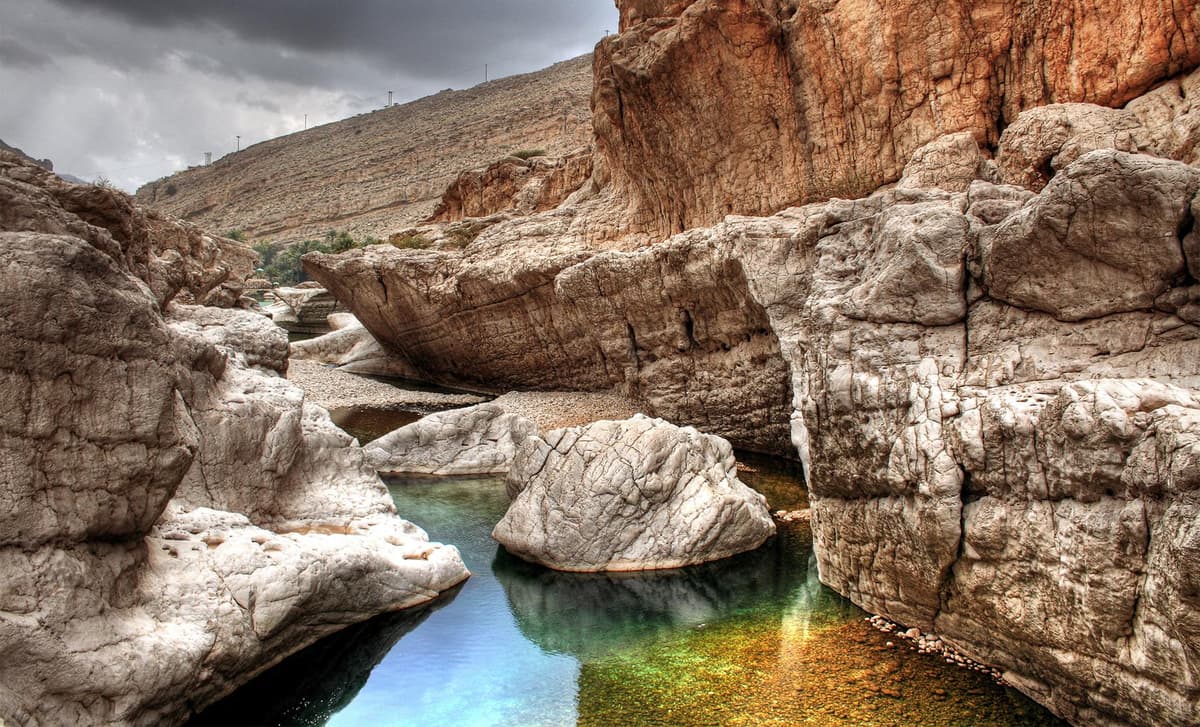
Wadi Bani Awf Oman: Complete Guide to Snake Canyon, Off-Roading, Mountain Villages, and Epic Hajar Adventures (2026)
Wadi Bani Awf Oman: The Great Mountain Crossing – An Epic Guide to Adventure, Canyon Hikes, Off-Roading, and Hidden Villages in the Hajar Mountains (2026)
Introduction: Oman's Grandest Shortcut
There are mountain passes, and then there is Wadi Bani Awf—a route so dramatic, so packed with raw beauty and adrenaline, that it has earned a reputation as one of the most memorable journeys in Oman and all of Arabia. Here, the Hajar Mountains rise in stark limestone waves, their peaks twisting skyward and their deep canyons carved by millennia of wind and rain. This is not just a way to get from one place to another; it’s an adventure in its own right—a “shortcut” that is every bit as rewarding as the destinations it connects.
Wadi Bani Awf (also spelled Awuf or Auf) is where the ancient heart of Oman comes alive. It’s a place where roads cling to vertical cliffs, where hidden villages nestle in impossibly green folds, and where the sounds of rushing water echo through narrow gorges. Whether you come for heart-pounding canyoning, world-class off-roading, or simply to stand and marvel at the scale of the landscape, Wadi Bani Awf promises an unforgettable encounter with the wild soul of Oman.
The Journey Begins: Entering the Wadi
The adventure starts as you leave the busy highways of Muscat behind and head northwest toward Nakhal and Al Awabi. The landscape begins to shift—flat plains give way to rolling foothills, date palms and small farms appear, and the jagged Hajar Mountains loom on the horizon. The tarmac narrows, the villages become fewer, and the road dips into the mouth of the wadi—a dry riverbed where the real journey begins.
From the very start, you sense the wildness and unpredictability of this place. The track hugs cliffs carved with ancient petroglyphs, the air is fresh and scented with wild herbs, and the silence is broken only by the occasional goat or the distant laughter of children playing in the shadow of stone houses.
The Great Crossing: Off-Roading Through Wonder
For many, the drive itself is the main attraction. Wadi Bani Awf is legendary among off-road enthusiasts, and for good reason. The route climbs and dips, sometimes precariously so, with hairpin turns, steep gradients, and cliff-edge vistas that will take your breath away (and test your nerves). Here, a 4WD is not just recommended—it’s absolutely essential. The unpaved track can be rough, with loose gravel and the constant risk of rockfalls. Rental agencies often forbid this passage in 2WD vehicles, and for good reason: the descent is too steep and brakes can overheat dangerously.
As you slowly wind your way deeper into the mountains, every bend reveals new marvels. The wadi floor is lush in places, dotted with date palms, banana groves, and the brilliant green of terraced fields fed by ancient falaj irrigation channels. Above, the cliffs soar in undulating layers of limestone—grey, gold, and ochre—while the sky seems impossibly blue.
Things To Do: Epic Adventures Await
1. The “Snake Canyon” Challenge
No discussion of Wadi Bani Awf is complete without mentioning Snake Canyon—Oman’s premier canyoning destination and one of the most thrilling natural playgrounds in the Middle East. The canyon (locally known as Wadi Bimah or Wadi Bani Awf Gorge) is a narrow, twisting slot carved deep into the rock. Here, the adventure is as much about courage as fitness.
With a professional guide—absolutely mandatory for the full traverse—you’ll jump into deep pools of cool, clear water, abseil down waterfalls, and slide along smooth rock chutes sculpted by centuries of rushing water. The canyon walls rise steep and close, sometimes so narrow you can touch both sides at once, amplifying the sound of splashing water and your own laughter.
Snake Canyon is not for the faint of heart or those without experience: it’s a five-hour technical trek that demands swimming, climbing, rappelling, and a sense of adventure. But for those who take it on, the sense of achievement and the beauty you’ll encounter—verdant ferns, mossy rocks, shafts of sunlight piercing the darkness—are simply unforgettable.
2. Little Snake Canyon: Adventure for All
If the full Snake Canyon is out of reach, don’t worry: Little Snake Canyon offers a gentler, more accessible taste of aquatic adventure. This side gorge is perfect for families, beginners, or anyone seeking a shorter, easier hike. The route features wading through shallow pools, scrambling over boulders, and even a bit of swimming, but none of the technical abseiling or long drops of the main canyon.
Here, the focus is on fun and exploration. Kids will love splashing in the natural pools and clambering over smooth stones. The towering walls and cool shadows create a magical atmosphere, and you’ll emerge refreshed, exhilarated, and ready for more.
3. Extreme 4x4 Driving: Climbing to Sharaf Al Alamain
For drivers, the highlight is the ascent from the wadi floor up to the Sharaf Al Alamain pass—a route hailed as one of the most famous off-road tracks in the Middle East. It’s a steep, switchback climb that clings to the side of the mountain, with vertiginous drops and heart-stopping views at every corner.
Take it slow and steady: the track can be narrow and loose, and oncoming traffic means you may need to reverse to a wider spot. But the reward is immense. As you rise, the panorama unfolds—deep gorges, sunlit peaks, and the “snake-like” ribbon of road below, twisting through the mountains. It’s a drive you’ll remember for a lifetime.
4. Football With a View: Balad Sayt Pitch
One of Oman’s most iconic images is the football field of Balad Sayt—a perfect green rectangle carved into the brown mountain landscape. Ringed by ancient stone walls and watched over by towering peaks, this field is a symbol of the joy and resilience of mountain life. On many afternoons, you’ll find children and young men playing spirited matches, their laughter echoing off the rocks.
Whether you’re a football fan or not, a visit here is a must. Sit on the terrace, watch the game, and savor the surreal beauty of sport in such a setting.
Places to See: Hidden Gems Along the Way
1. Balad Sayt Village: Oman's Fairy-Tale Hamlet
Tucked into a fold of the mountains, Balad Sayt is often described as the most beautiful village in Oman. Stone houses with wooden doors cluster along narrow alleys, flanked by terraced fields that shimmer with green even in the harshest heat. The village is a living testament to Omani tradition—a place where life is lived at a slower pace, where the sound of running water mingles with the call to prayer, and where the hospitality of locals is legendary.
Wander the winding paths, admire the gardens, and perhaps share a sweet Omani coffee with a resident. From vantage points above the village, the view of the entire wadi, with its patchwork of fields and backdrop of soaring peaks, is nothing short of breathtaking.
2. Bimah Village: Gateway to Adventure
Not to be confused with the famous sinkhole, Bimah is a mountain village perched at the entrance to the “Left Fork” of Snake Canyon. It’s a quiet, sun-bleached place with stunning views of the valley and easy access to both technical and family-friendly canyoning routes. The village is the perfect base for exploring the wadi’s hidden corners, and its elevated position offers sweeping vistas across the mountains.
3. Sharaf Al Alamain: The Summit and the Sky
The literal high point of the drive, Sharaf Al Alamain is where the road crests the ridge. At over 2,000 meters above sea level, the air is cool, crisp, and scented with wild thyme. From here, you can see both the Al Batinah plains to the north and the Al Hamra region to the south—a 360-degree panorama that stretches to infinity.
It’s a favorite spot for wild camping: spend the night under a sky ablaze with stars, watch the sun rise above the jagged peaks, and feel the tranquility of a world untouched by modern noise.
4. The “Eye” of the Needle: Nature’s Window
As you journey through the wadi, keep alert for the natural rock arches and “windows” high on the cliffs. These formations, carved by centuries of erosion, frame the Omani sky in dramatic fashion. They are favorite subjects for photographers and a reminder that nature is the greatest architect of all.
Trip & Itinerary Advice: Plan Your Epic Crossing
Best Time to Visit
The ideal season for Wadi Bani Awf is October to April, when temperatures are mild and the air is clear. Never attempt canyoning or deep wadi excursions if rain is forecast—even distant storms can trigger instant, deadly flash floods due to the narrow, steep walls.
Pro Tips
Vehicle: 4WD is 100% mandatory. The terrain is steep, rough, and risky for anything less. Make sure your brakes, tires, and transmission are in excellent condition.
Guide: For Snake Canyon, always book with a reputable local operator. They provide helmets, life jackets, ropes, and, crucially, the experience to keep you safe.
Supplies: There are no petrol stations in the wadi! Fill up at Al Awabi (if coming from the Batinah side) or Al Hamra (from the interior) before you start. Bring more water and snacks than you think you’ll need.
Safety: Mobile signal is unreliable. Tell someone your route and expected return. Carry a fully charged phone, and ideally a GPS or offline map.
Respect: Leave no trace. Take all rubbish with you, avoid picking plants or disturbing wildlife, and be courteous to villagers.
Suggested Full-Day Itinerary: The Great Mountain Crossing
7:30 AM:
Set off from Muscat toward Nakhal and Al Awabi, enjoying the early morning light on the mountains.
9:00 AM:
Enter Wadi Bani Awf. Take a break at Little Snake Canyon for a one-hour splash, wade, and easy hike—perfect for warming up and soaking in the scale of the cliffs.
11:00 AM:
Continue the winding drive deeper into the wadi, making your way toward Balad Sayt. Stop to walk through the village’s narrow alleys, chat with residents, and admire the terraced gardens.
1:00 PM:
Have a picnic lunch overlooking the famous Balad Sayt Football Field. Savor local dates, fresh fruit, or a simple sandwich while taking in one of Oman’s most iconic views.
2:30 PM:
Begin the ascent toward the Sharaf Al Alamain pass. Pause frequently for photos—each bend offers new angles of the “snake-like” road and the dramatic drops below.
4:00 PM:
Reach the summit at Sharaf Al Alamain. Step out, breathe the cool mountain air (often 10°C cooler than the valley), and take in the panoramic vistas stretching from the Al Batinah plain to the high peaks around Jebel Shams.
5:30 PM:
Descend toward Al Hamra, following the new perspectives as the afternoon sun paints the cliffs gold. Drive back to Muscat via the main highway, already dreaming of your next mountain adventure.
Final Reflections: The Heart of the Hajar
Wadi Bani Awf is more than a route—it’s a journey through Omani time and tradition, through landscapes sculpted by earth’s slow hand and the resilience of human communities. Here, the grandeur of the Hajar Mountains is matched only by the warmth of the people and the thrill of adventure at every turn.
Whether you come to test your courage in the canyon, to navigate ancient villages and terraced fields, or simply to stand in awe before the cliffs and sky, the Great Mountain Crossing will gift you with stories, photographs, and memories that endure long after you leave. For the adventurous soul, there is no better way to experience the wild heart of Oman.
Written by Farees
Travel writer and founder of Oman Explorer. Based in Muscat, Oman, with years of experience exploring the Sultanate's hidden gems, ancient forts, stunning wadis, and desert landscapes. Passionate about sharing authentic travel experiences and helping visitors discover the beauty of Oman.
Learn more about the authorMore Articles to Explore



Comments (0)
Sign in to comment
Create a free account or sign in to join the conversation.
No comments yet. Be the first to comment!